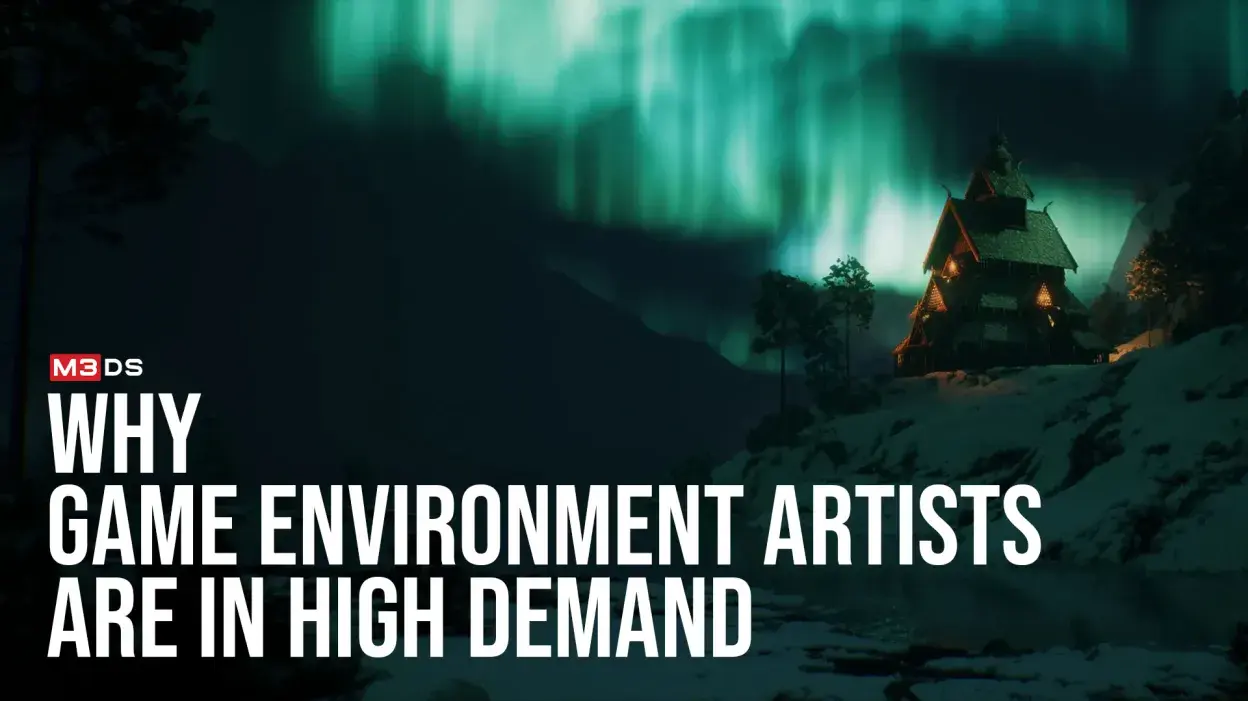
Why Game Environment Artists Are in High Demand
The gaming industry has evolved dramatically over the years. Modern games are no longer judged solely by their gameplay mechanics; players also expect immersive worlds that feel engaging, authentic, and worth exploring.
From fantasy kingdoms and futuristic cities to realistic urban environments and post-apocalyptic landscapes, game worlds play a crucial role in shaping the overall player experience. Behind these captivating virtual spaces are Game Environment Artists, the creative professionals responsible for designing and building the environments that give games their visual identity and atmosphere.
As player expectations continue to rise, studios are investing more heavily than ever in creating rich, detailed worlds. But what exactly is driving this demand, and why are Game Environment Artists becoming some of the most sought-after professionals in modern game development? Let’s explore the key factors behind their growing importance.
What Does a Game Environment Artist Do?
A Game Environment Artist creates the visual settings that make up a game’s world. Their work includes modeling landscapes, buildings, props, vegetation, interiors, and other environmental assets that contribute to a game’s overall atmosphere.
Their responsibilities often include:
- Creating 3D models for game environments
- Sculpting high-detail assets
- Developing textures and materials
- Building scenes inside game engines
- Optimizing assets for real-time performance
- Collaborating with level designers and developers
- Supporting the visual storytelling of a game
Every environment artist helps transform concepts and ideas into playable spaces that players can explore and experience.
Many professionals in this field begin their careers by applying for environment artist jobs in game studios, where they contribute to building real-time worlds.
8 Reasons Why Game Environment Artists Are in High Demand
Game environment artists play a crucial role in shaping gameplay spaces, visual identity, and player experience, making them an indispensable part of every modern game development pipeline.
1. Environment Artists Transform Concepts into Playable Worlds
Every game begins with ideas and visual concepts. While concept artists establish the creative direction, environment artists bring those ideas into a playable form.
They take sketches and designs and transform them into detailed 3D environments. This process involves building structures, creating landscapes, and arranging assets to form functional game spaces. Their ability to bridge artistic vision and technical execution makes them valuable throughout the development process.
2. Open-World Games Are Bigger Than Ever
Open-world games have become one of the most popular game formats in the industry. Players now expect expansive worlds filled with diverse locations, hidden secrets, and areas to discover.
Creating these large environments requires a significant amount of environmental content. From forests and mountains to villages and cities, every location must be carefully designed and built. As game worlds continue to grow in size and complexity, studios need more environment artists to create and maintain these immersive experiences.
3. Environmental Storytelling Has Become Essential
Modern games often tell stories through their environments. Instead of explaining everything through dialogue, developers use locations and visual details to communicate information to players.
A damaged building, an abandoned campsite, or a forgotten monument can reveal important details about a game’s history and characters. Environment artists play a key role in crafting these visual narratives, helping players learn about the world through exploration and observation.
4. Rising Visual Standards in Modern Games
Players expect high-quality visuals, and studios work hard to meet those expectations. Detailed environments can make a game feel more immersive, realistic, and memorable.
From realistic materials and atmospheric lighting to intricate architectural details, modern games require a level of visual polish that wasn’t possible years ago. To achieve these standards, studios rely on talented environment artists who can create visually impressive worlds that capture players’ attention.
5. Technology Is Creating New Possibilities for Environment Art
Advancements in game development tools have expanded what environment artists can create. Modern software allows artists to build more detailed assets, manage larger scenes, and achieve higher levels of realism.
Technologies such as advanced rendering systems, procedural workflows, and real-time lighting have opened new creative possibilities. While these tools improve efficiency, they also increase expectations, making skilled artists more important than ever.
6. Studios Need Environment Art Specialists
Game development has become increasingly specialized.
While understanding multiple disciplines is helpful, many studios actively seek artists who excel in specific areas. Environment art is one of those highly sought-after specialties.
Dedicated environment artists often develop expertise in:
- Modular asset creation
- World-building
- Material development
- Scene composition
- Lighting
- Terrain creation
- Optimization techniques
- Architectural design principles
By focusing on these skills, artists can become indispensable contributors to production teams.
Studios value specialists because they help maintain quality standards while improving efficiency throughout development.
7. Growth of Indie and AAA Game Development
Demand for environment artists comes from both large and small studios. AAA developers require extensive art teams to build massive projects, while indie studios increasingly create visually ambitious games of their own.
The accessibility of modern game development tools has enabled more companies to produce professional-quality content. This growth has created a wider range of career opportunities for environmental artists across the industry.
8. Environment Art Skills Transfer Across Industries
Although many people associate environment art exclusively with gaming, the skill set has applications far beyond video games.
Professionals with environment art experience often find opportunities in:
- Film and animation
- Virtual production
- Architectural visualization
- Augmented reality experiences
- Virtual reality projects
- Simulation and training applications
- Metaverse and digital world development
Because the demand spans multiple industries, artists with strong environment-creation skills enjoy a wider range of career opportunities.
This versatility makes environment art an attractive specialization for aspiring digital artists.
Related Articles:
Stylized Environment Course for the Gaming Industry
Building a Strong Environment Art Career
For aspiring artists, the growing demand creates exciting possibilities. However, success requires more than artistic talent alone.
Strong environment artists typically develop skills in:
- 3D modeling
- Texturing
- Sculpting
- Composition
- Lighting
- Material creation
- World-building
- Technical optimization
Equally important is building a portfolio that demonstrates both creativity and production-ready workflows.
Employers want to see environments that not only look impressive but also show an understanding of how assets function within a real game pipeline.
Consistent practice, structured learning, and portfolio development are essential steps toward entering the industry.
Career Opportunities for Environment Artists
Training as an environment artist doesn’t lock you into just one role. Depending on what you enjoy most, you could go in a few different directions:
- Environment Artist – the main role at most game studios
- Prop Artist – specialising in the objects and items inside environments
- Level Artist – focused on how spaces are laid out for gameplay
- Technical Artist – the bridge between the art team and the programming team
- Virtual Production Artist – working on film and TV sets built inside game engines
- Arch-Viz Artist – creating 3D walkthroughs for architects and real estate
The core skills carry across all of these. Once you understand how to build real-time environments properly, a lot of doors open up.
For a step-by-step learning structure, check our 3D artist roadmap from beginner to professional level.
Want to Become a Game Environment Artist?
At M3DS Academy, aspiring artists can develop the practical knowledge needed for a career in environment art. Our 3D Environment Art Specialization covers key areas such as 3D modeling, texturing, lighting, world-building, and asset optimization using industry-standard tools and techniques.
For those interested in more artistic and stylized visuals, our Stylized Environment program focuses on creating distinctive worlds with strong design principles and visual appeal.
Through hands-on projects and portfolio-focused training, students gain experience with professional workflows while developing the artistic and technical abilities valued by studios.
Our commitment to excellence has earned international recognition. M3DS Academy was ranked by The Rookies as the Best Creative Media School in the World. We have also been recognized as the 4th-ranked Game Development School worldwide and the #1 Game Development School in the United States. These achievements reflect our dedication to delivering industry-focused education, expert mentorship, and career-ready training.
Ready to turn your passion for world-building into a profession? Apply now and begin your environment art journey with M3DS Academy.