
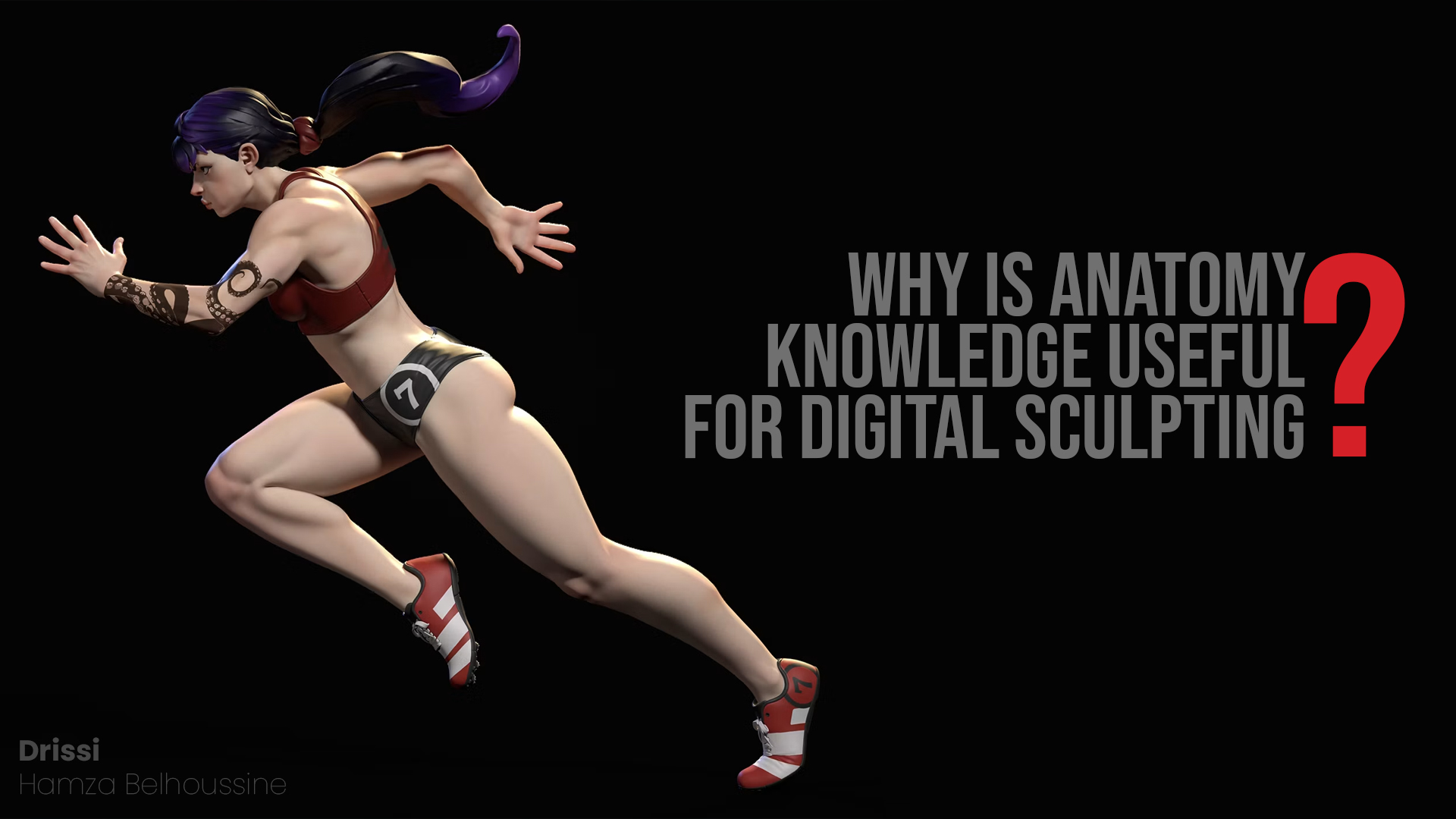

When you start digital sculpting, it is natural to spend most of your time learning the software. You practise moving forms, shaping the mesh, smoothing surfaces, and adding detail. But as your characters become more complex, another skill becomes increasingly important: understanding anatomy for 3D sculpting and the structure of the human body.
Anatomy gives you a better idea of what should happen beneath the surface of a character. Instead of relying entirely on what looks right in the moment, you can make decisions based on proportions, structure, and movement.
That is why anatomy knowledge can make digital sculpting more controlled and intentional.
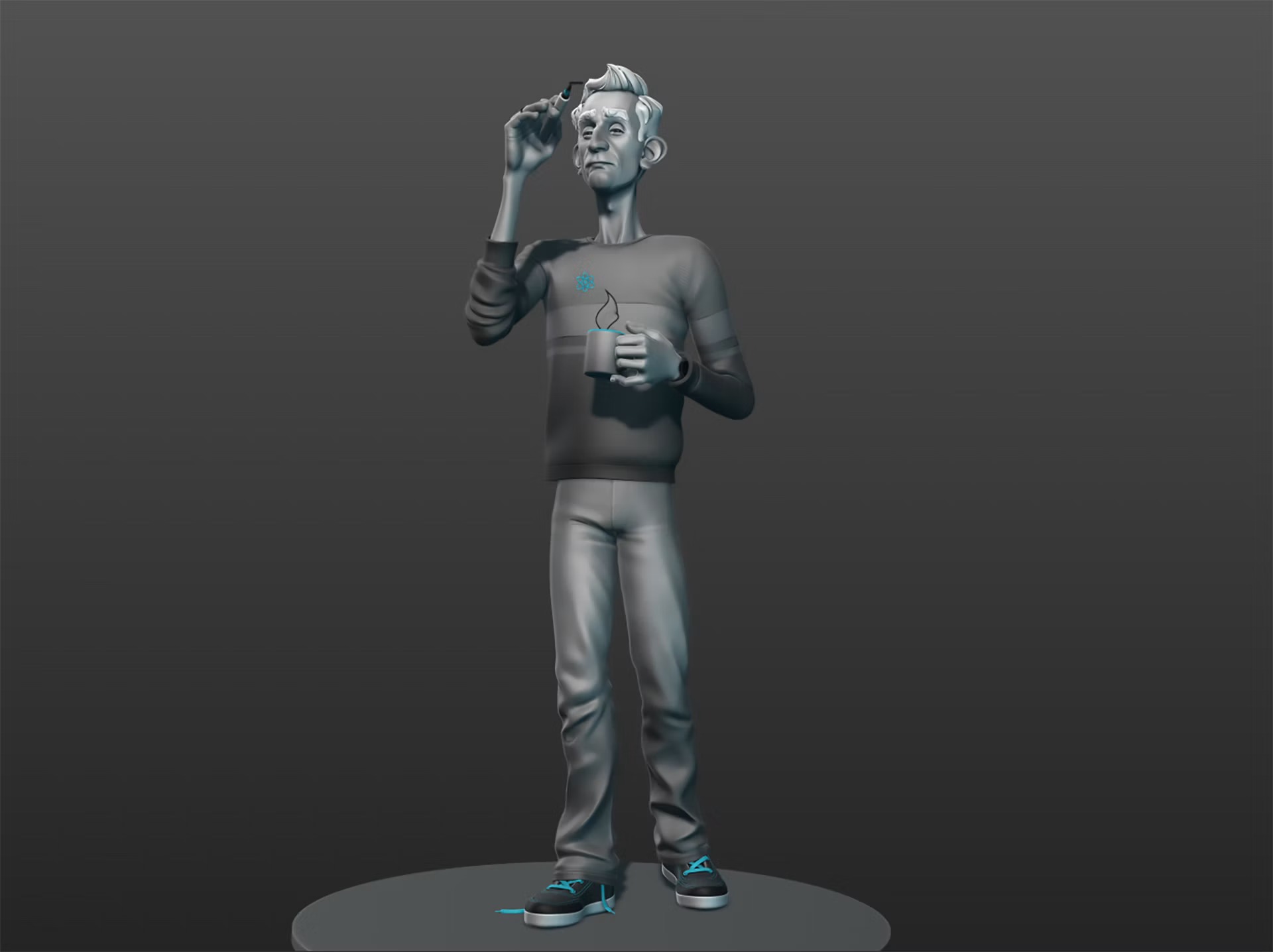
Credit: maxon.net/en/gallery
What Role Does Anatomy Play in Digital Sculpting?
A human figure is not simply a collection of surface shapes. Its appearance is influenced by the skeleton, muscles, joints, and soft tissue beneath the skin.
For artists learning anatomy for 3D sculpting, this means understanding what creates the visible forms of the body. The rib cage affects the shape of the torso, the skull establishes the foundation of the head, and joints determine how different parts of the body connect and move.
You do not need medical-level anatomical knowledge to use this information. What matters is understanding the structures that directly influence the character you are creating.
Want to create more convincing characters? Learn about the common character design mistakes that can affect proportions, structure, and overall visual appeal.
How Does Anatomy Improve Digital Sculpting?
1. It Helps You Build More Believable Forms
A character can have detailed skin pores, wrinkles, and clothing but still look unnatural if the main body forms are not convincing.
Anatomy helps you understand how the major parts of the body fit together. For example, the shoulder connects the upper arm, chest, and back through a specific arrangement of forms.
Understanding these relationships helps you establish the overall shape of a character before spending time on smaller details.
2. It Makes Proportions Easier to Judge
Proportion affects how a character looks as a whole. A head that is too large, arms that are too short, or a torso that is too long can change the character's appearance even when the individual parts are well sculpted.
Anatomical landmarks give you practical points for evaluating these relationships. You can compare the positions of the shoulders, elbows, hips, knees, and other major points instead of judging the figure entirely by eye.
3. It Helps You Understand How Surface Forms Are Created
The visible surface of the body is influenced by bones, muscles, and soft tissue beneath it.
For a digital sculptor, understanding this relationship helps explain why certain areas project, flatten, or transition into one another. You can recognise how underlying structures affect the surface instead of simply copying the outer contour of a reference.
This can help you create more accurate transitions between different forms.
4. It Helps You Sculpt More Natural Poses
The body's appearance changes when it moves. Bending an arm, twisting the torso, crouching, or shifting weight can change the position and visibility of different forms.
Anatomy helps you understand these changes so you can adjust the sculpt according to the character's movement rather than treating a pose as a simple distortion of a neutral figure.
This becomes especially useful when creating characters for animation, games, or cinematic scenes.
5. It Makes Complex Areas Easier to Sculpt
Some areas require more careful construction because several anatomical structures come together in a small space.
Hands and feet are good examples, while the face requires careful attention to the skull, jaw, and facial planes. Understanding the underlying structure allows you to break these areas into manageable forms and refine them progressively.
This makes the sculpting process more controlled than trying to reproduce every visible detail at once.
6. It Helps You Identify and Correct Structural Problems
Anatomy can also help you determine why a sculpt does not look right.
For example, an unnatural shoulder may be caused by the position of the joint or the way the upper arm connects to the torso rather than by a lack of surface detail.
When you understand the body's structure, you have a clearer basis for checking your model. You can examine the relationships between major forms and make targeted corrections instead of repeatedly pushing and smoothing the mesh without knowing what needs to change.
Character creation involves more than sculpting. Find out why Autodesk Maya is an important part of the character design pipeline and how it fits into the overall workflow.
Do You Need Advanced Anatomy to Start Sculpting?
No. You can begin digital sculpting with a basic understanding of anatomy and gradually build your knowledge alongside your artistic skills.
Start by learning:
- Basic body proportions
- Major bones and landmarks
- Main muscle groups
- Basic facial structure
- How forms change around joints
Once these fundamentals become familiar, you can study more detailed anatomy as your projects require it. This keeps the learning process manageable without trying to memorise every anatomical structure at the beginning.
Related Articles:
3D Artist Roadmap: Beginner to Professional
What Is Baking in 3D Modeling and Sculpting and Why Is It Important?
Is a Degree Necessary for Becoming a Game Developer or 3D Artist?
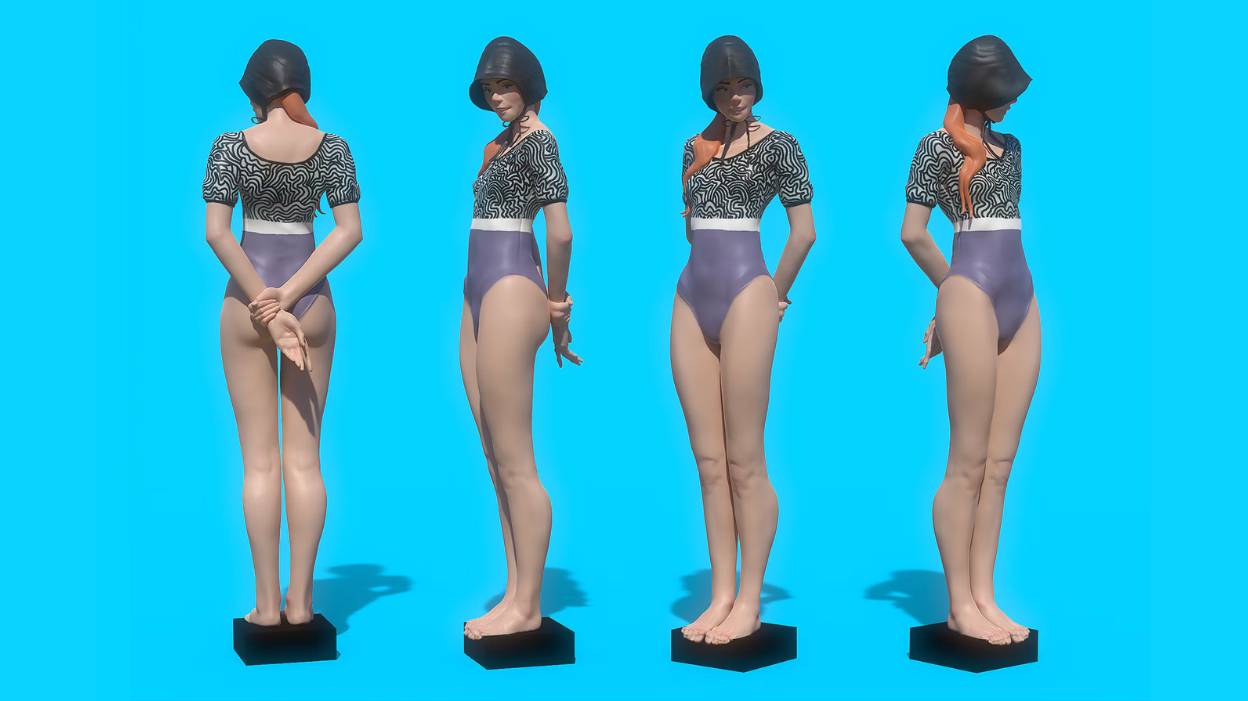
Credit: maxon.net/en/gallery
Building Anatomy Skills Through Structured Training
Learning anatomy independently is possible, but it can be difficult to know which structures to study first and how to apply them to character sculpting.
At M3DS Academy, we believe strong character art begins with a solid understanding of form and structure. Our character-focused training helps aspiring artists develop practical skills across the character creation workflow.
Our character art fundamentals course provides a foundation for developing character art skills, while 3D character art specialization offers more extensive training for artists looking to take those skills further.
We combine software practice, guided projects, and mentor feedback to help students apply what they learn while building their character art portfolios. This allows anatomy to be learned alongside sculpting and modeling rather than as a completely separate subject.
Ready to strengthen your sculpting skills? Explore our character art courses at M3DS Academy and take your 3D art further.